How to Start Day Trading From Scratch and Build a Repeatable Process That Survives Real Money
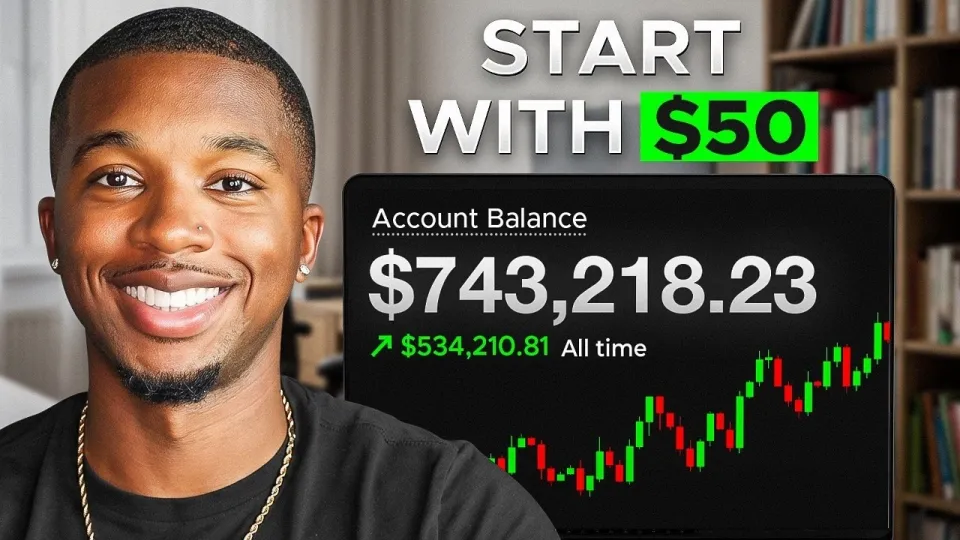
Video: Easiest Way To Start Day Trading From Scratch (Exactly What I Did)
Want articles like this for your own video to promote it on YouTube and Google? Order them through the Telegram bot @sat_sit_bot. It writes articles around your video, embeds the video and publishes them on popular niche websites (no ads). Try it free: 50 articles on us.
· based on the channel Jooviers Gems
Key takeaways
- Most beginners lose because they trade real money before they can read a chart or size a position.
- A workable starting risk is 0.5–1% of the account per trade, with a hard daily stop after 2–3 losses.
- Demo trading for 30–60 days plus backtesting builds the pattern recognition that live money cannot teach for free.
- Prop firm evaluations and funded accounts let a small trader control size far above their own balance.
- One instrument and one setup, repeated for months, beats switching strategies every week.
Trading is the business of buying and selling an asset for a short-term profit, and the easiest way to start day trading from scratch is to learn one chart setup, risk a fixed small percentage per trade, and prove the process on a demo account before funding it with real money. Everything else, indicators, alerts, prop firm evaluations, comes after that foundation. Jooviers Gems breaks the whole path down in the video "Easiest Way To Start Day Trading From Scratch (Exactly What I Did)", and the same walkthrough is available through his Inner Circle, where members get his actual trades: Join the Inner Circle to get all my trades.
What day trading actually is and what it is not
Day trading means opening and closing positions inside the same session, so no trade is carried overnight and no earnings gap can hit you while you sleep. It is not gambling and it is not passive income; it is a skill built from screen time, repetition and a written plan. A trader who cannot explain in one sentence why they entered a trade does not have a strategy, they have a feeling. The practical difference between a trader and a gambler is the risk limit: a trader knows the maximum they can lose on the day before the first click, a gambler finds out afterwards.
The beginner setup: one instrument, one pattern, one timeframe
Pick a single market and a single setup, then repeat it until the entry is boring. Beginners usually drown because they watch ten tickers, three timeframes and five indicators at once. Choose one liquid market such as an index futures contract or a major forex pair, one chart timeframe for entries, and one higher timeframe for direction. Then define the trade in writing: what the setup looks like, where the entry triggers, where the stop goes, where the first target sits. If the setup is not there, there is no trade. Doing nothing is a position.
Risk per trade, position sizing and the daily stop
Risk control is the part that keeps a beginner in the game long enough to get good. A common starting rule is risking 0.5–1% of the account on a single trade, which means a $1,000 account risks $5–$10 per idea. The stop-loss distance defines the position size, not the other way around: wider stop means smaller size, tighter stop means larger size, and the dollar risk stays the same. Add a daily stop, for example two or three losing trades ends the session, and a weekly stop so a bad Monday does not become a blown account by Friday. Traders who survive their first year are rarely the ones with the best entries, they are the ones who never let one trade decide their month.
Demo trading, backtesting and the 30–60 day proving ground
A demo account is where the process gets tested without paying tuition to the market. Backtest the chosen setup over at least 100 historical examples and log every result: entry, stop, target, outcome, and what the market was doing. Then trade it on demo for 30–60 days, same size rules, same session, same instrument. The goal is not a big demo profit, it is a consistent log that shows the setup works often enough to be worth real money. Many viewers of the channel describe exactly this phase: weeks of demo trading and journaling before risking a cent, and a journal is where the real feedback lives.
Prop firm funding, futures and small account reality
A funded account is the fastest way to trade size without a large personal balance, and it is also a business with rules. Prop firm evaluations usually limit daily loss and total drawdown, and a single rule break ends the account regardless of how good the trades were. Futures and forex are the two most common markets for this route because they trade nearly around the clock and offer leverage, which cuts both ways. Before paying for any evaluation, read the drawdown terms, the profit split and the payout schedule. A small personal account and a funded account should follow the same plan; the size changes, the process does not.
The daily routine that makes trading repeatable
A routine turns trading from a mood into a job. Pre-market: check the economic calendar, mark the key levels from the higher timeframe, and write down the one or two scenarios worth trading. During the session: wait for the setup, take it or skip it, log the result. After the session: review the log, screenshot the winners and losers, and note the mistake of the day in one line. Weekly: review the stats, win rate, average winner versus average loser, and cut whatever rule got broken most often. This loop is unglamorous and it is exactly what separates traders who last from traders who post one good month.
Common beginner questions and mistakes
New traders ask the same handful of things, and the answers are consistent. How much money do I need to start? Enough to risk 0.5–1% per trade without the loss changing your life, which can be a few hundred dollars on a micro contract or a demo account. How long until I am profitable? Months of consistent screen time, not weeks, and the timeline depends on how honestly the journal is kept. Should I buy a course? A structured course can compress the learning curve, but only if it comes with a rule set you can test yourself. What kills beginner accounts fastest? Oversizing after a loss, moving the stop, and adding to a losing position. The audience feedback around this material repeats one theme: the explanations are simple, and the execution is still hard, which is normal.
Useful links
- Join the Inner Circle to get all my trades
- Get instant funding to trade with The Edge Funder
- Join The Edge Funder Discord community
- Follow Joovier on Instagram
- Recommended forex broker
Final thoughts on starting from zero
Starting day trading from scratch is a sequence, not a secret: learn one setup, cap the risk, prove it on demo, then scale with your own capital or a funded account. The channel Jooviers Gems built this walkthrough around exactly that order, which is why it lands with beginners who are tired of hype. The traders who make it are the ones who keep a journal, respect the daily stop, and stay with one process long enough for the numbers to mean something. If you want to see the trades behind the process, join the Inner Circle here and compare your own log against a working one. Treat the first year as tuition you control, not a lottery ticket.
Questions & answers
How much money do I need to start day trading?
You need enough to risk 0.5–1% per trade without the loss affecting your life, which can be a few hundred dollars on a micro contract or a demo account. The amount matters less than the risk rule: if a $10 loss makes you change the plan, the size is too big. Many beginners start on demo and move to a small live account only after 30–60 days of consistent logging.
How long does it take to become profitable?
Realistically months of consistent screen time, backtesting and journaling, not weeks. The timeline depends on how honestly you review your own trades and how strictly you follow one setup. Traders who switch strategies every week usually restart the clock each time.
Is a prop firm funded account better than trading my own money?
It gives you access to far more size than your own balance allows, but it comes with daily loss and drawdown rules that end the account if broken. Read the profit split, payout schedule and drawdown terms before paying for an evaluation. The trade plan should be identical to the one you use on a personal account.
What is the biggest mistake beginners make?
Oversizing after a loss, moving the stop-loss, and adding to a losing position are the fastest ways to blow an account. A fixed percentage risk per trade plus a hard daily stop removes most of that damage. Skipping trades that do not fit the setup is also part of the job.
Source: Easiest Way To Start Day Trading From Scratch (Exactly What I Did) · Markdown version