Meme coin trading works when you copy a pro's process instead of chasing pumps
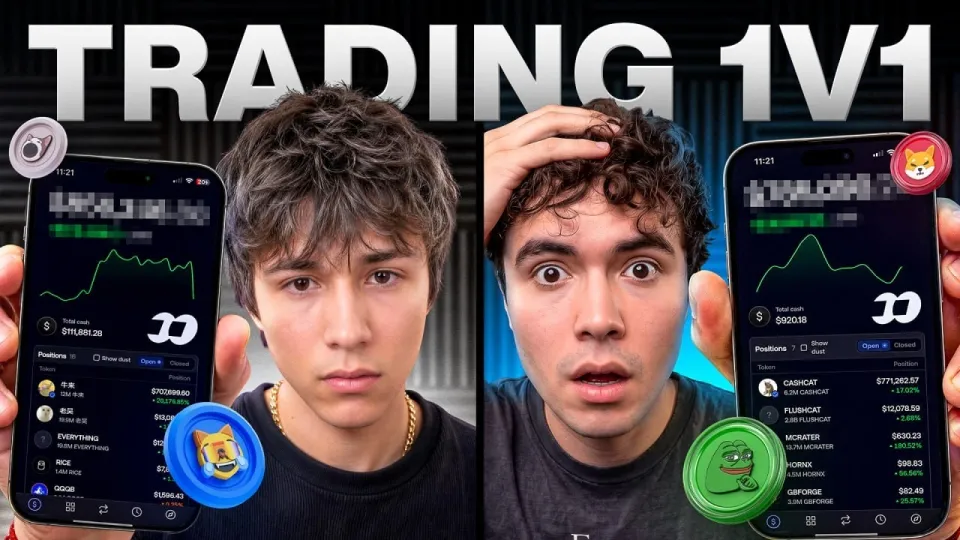
Video: I Challenged A Pro Memecoin Trader (Who Won?)
Want articles like this for your own video to promote it on YouTube and Google? Order them through the Telegram bot @sat_sit_bot. It writes articles around your video, embeds the video and publishes them on popular niche websites (no ads). Try it free: 50 articles on us.
· based on the channel insentos
Key takeaways
- A live pro-vs-amateur meme coin session on the insentos channel ran roughly 40 minutes, with trading and coaching from 0:33 and a second trader joining around 37:00.
- The pro guest kept narrating his thought process mid-trade, which is the single most useful habit for beginners watching meme coin content.
- Tools named in the video description: Axiom (axiom.trade) for execution and FOMO (fomo.family) for community and referral access.
- Viewer consensus in the comments: most similar challenge videos end in losses, so treat any single session as one sample, not a strategy.
- The most requested follow-up was a small-bankroll challenge, which highlights the real constraint for beginners: position sizing, not picking.
Meme coin trading is short-horizon speculation on tokens with no cash flow, launched mostly on Solana and Ethereum and priced purely by attention, liquidity and the order book. The practical version of it — the one worth learning — is a repeatable process: fixed position size, a written entry trigger, a hard exit rule and a tool stack you can execute in seconds. The insentos challenge video with a professional meme coin trader is a useful case study because it shows that process running live, in real time, with someone explaining decisions instead of just posting a screenshot of a win. If you want the same execution and community setup the participants used, start with the FOMO registration link.
What a meme coin actually is and why the odds are stacked
A meme coin is a token whose value rests on narrative and community rather than revenue, and that single fact drives everything about how you trade it. There is no earnings multiple, no discounted cash flow, no floor from buybacks — only the flow of new buyers against sellers. That makes the market a game of reflexivity: price rises attract attention, attention attracts buyers, buyers push price higher until the flow stops.
Three structural features matter more than any indicator:
- Liquidity is thin and removable. A pool can be drained or a large holder can exit into your bid, and slippage on the way out is often worse than on the way in.
- Supply concentration is the hidden risk. A handful of wallets holding a large share can end the trade before your thesis plays out.
- Time is compressed. Moves that would take a stock weeks happen in minutes, so pre-committed rules beat in-the-moment judgment.
None of this makes meme coins untradeable. It makes them a discipline problem rather than an analysis problem.
What the pro-vs-amateur challenge format shows that highlight reels do not
The insentos video is built around a simple premise: an experienced meme coin trader trades live while being asked to explain his reasoning, and the host trades alongside him. The description splits the session into trading and advice from the 0:33 mark, a second trader joining around 37:00, and a short outro. The value is not the profit and loss — it is the narration.
Viewers picked up on exactly that. The most-liked comment on the video praises the guest for staying informative mid-trade and asking the host about his thought process even while managing a live position. That is the transferable skill: a trader who can articulate why he is entering, where he is wrong, and what he will do if the token dumps is a trader with a system. A trader who cannot explain the exit before entering is improvising.
The second most-liked comment makes a fair point in the other direction — the host is himself an experienced meme coin trader, so a "pro vs. amateur" framing is partly a content device. Read the video as two professionals comparing notes, and it becomes more useful, not less.
The execution stack: Axiom for speed, FOMO for community and access
The tooling in this niche is standardized because speed decides outcomes, and the video description names the two pieces used. Axiom (https://axiom.trade/) is a trading terminal built for on-chain meme coins: you paste or discover a contract address, see the pool and holder data, set slippage, and route the order without leaving the interface. FOMO (https://fomo.family/r/insentos) is the community and access layer around that kind of trading, and the referral link in the description is the entry point the channel promotes.
A workable beginner setup looks like this:
- Create a dedicated wallet used only for meme coin trades, funded with an amount you are prepared to lose entirely.
- Import it into the terminal, and check the token's pool size, holder distribution and recent trade flow before touching the buy button.
- Set slippage deliberately — high enough to fill, low enough that you are not the exit liquidity for a sniper.
- Pre-set your take-profit and stop levels in writing before entry, because the chart will not give you time to think.
Position sizing and risk rules that separate trading from gambling
Position sizing is the whole game in meme coins, and it is the part beginners skip. A strategy with a positive edge still ruins you if a single token can take 40% of your bankroll. The professional standard is the opposite of what the timeline suggests: many small positions, each sized so a total loss is survivable and unremarkable.
A simple framework that survives contact with real markets:
- Cap per token. Risk no more than 1–3% of your trading bankroll on any single meme coin, measured at your stop, not at your entry.
- Cap per session. Decide in advance how many attempts you get in a day; after that, close the terminal.
- Define the invalidation first. Before buying, name the price or the event that proves you wrong — liquidity pull, a large holder selling, momentum dying.
- Scale out, don't hope. Take partial profit into strength; meme coin rallies rarely give a second chance at the top.
- Log every trade. Entry reason, exit reason, size, result. Ten logged trades teach more than a hundred watched videos.
One recurring theme in the comments under the challenge is that similar videos often end in a loss, and that trading from an account with an audience is easier than trading anonymously. Both observations are correct and both point to the same conclusion: judge a method by whether it survives a losing streak, not by whether it worked once on camera.
How to watch a live meme coin session and actually learn from it
Watching a live session is only useful if you extract decisions rather than tickers. The challenge format on the insentos channel is well suited to this because the guest talks through his reasoning while the trade is open, which lets you compare your own read against his in real time.
A drill that works: pause the video before each entry and write down what you would do — buy, skip, or wait — plus your size and your exit. Then watch what the trader did and why. Over a dozen entries you will find your systematic biases: entering too late on momentum, sizing up after a win, holding losers while cutting winners. That self-diagnosis is the actual output of watching this kind of content, and it is why viewers keep asking for more episodes in the same format.
Common questions and doubts from new meme coin traders
New traders tend to hit the same four walls, and the comment threads under the challenge video map them clearly. The first is access: people note that everyone advertises communities and groups but joining them is often harder than it looks, which is why a direct referral entry point matters. The second is credibility: if the host is already a professional, is the comparison meaningful, or is it entertainment? The honest answer is that the format is entertainment with real information embedded, and your job is to extract the process.
The third is the small-account problem. The most-liked request in the comments was a challenge starting from a much smaller bankroll, which reflects the real constraint: fees, slippage and minimum position sizes bite hardest when your account is small. The fourth is the emotional one — several viewers describe the session as informative precisely because they are new and could see the strategy being applied rather than described. The remedy for all four is the same: trade small, log everything, and treat each session as one data point.
Useful links
- FOMO — registration and community access via the insentos referral
- Axiom — on-chain meme coin trading terminal
- insentos on X
- insentos on Instagram
- insentos on TikTok
The takeaway for anyone trading meme coin markets
Meme coin trading rewards process over prediction, and the live challenge format makes that visible in a way a highlight reel never can. The professional in the session earned attention not by winning every trade but by explaining his reasoning while the position was open — entry logic, invalidation, and exit plan — which is the only part of the process you can copy. Build the boring scaffolding first: a dedicated wallet, fixed position sizes, a written exit rule and a trade log. Then use live sessions as calibration for your own decisions rather than as signals to follow. The insentos channel produced this particular breakdown, and its challenge format is worth revisiting as a recurring exercise in self-diagnosis. If you want to trade alongside that community, the FOMO sign-up link is where the video points viewers to start.
Questions & answers
Is meme coin trading just gambling?
It becomes gambling when position size is unplanned and exits are improvised. With a fixed 1–3% risk per token, a pre-defined invalidation level and a written exit plan, it is a high-variance speculation with a defined downside. The difference is entirely in the rules you set before entering, not in the token you pick.
What tools do I need to trade meme coins?
At minimum a dedicated wallet, a terminal that shows pool and holder data and routes orders quickly — Axiom is the one named in the challenge video — and a way to track positions and results. Community access, such as the FOMO link in the description, is optional but useful for discovery and shared research.
Can I start with a small bankroll?
Yes, but the constraints are real: fees and slippage eat a larger share of small positions, and many tokens have practical minimum sizes. Start with an amount you can lose entirely, keep each position small relative to the total, and expect the learning curve to matter more than the returns at first.
Why do similar challenge videos so often end in a loss?
A single session is one sample, and meme coin outcomes are dominated by variance in the short run. Videos also tend to be published when the story is interesting rather than representative. Judge the method by whether it survives a losing streak, and remember that trading with an audience is not the same as trading anonymously.
Source: I Challenged A Pro Memecoin Trader (Who Won?) · Markdown version